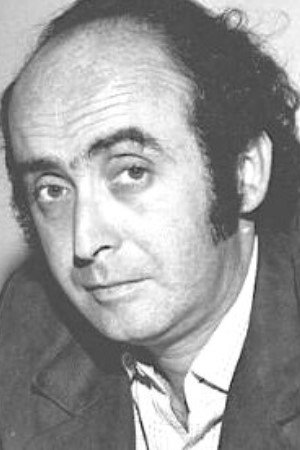
Vladimir Herzog, known as Vlado, was a Brazilian journalist, professor, and filmmaker. He was born on June 27, 1937, in Osijek, Croatia (then part of Yugoslavia). After spending some time in Italy, he emigrated to Brazil with his parents in 1942. Raised in São Paulo, he later became a naturalized Brazilian citizen. Herzog studied Philosophy at the University of São Paulo (USP) and began his journalism career in 1959 at the newspaper O Estado de S. Paulo. At the time, he felt that his birth name, Vlado, didn’t sound natural in Portuguese, so he adopted the name Vladimir. In the early 1960s, he married Clarice Herzog.
Herzog began working in television in 1963, and two years later he was hired by the BBC’s Brazilian Service, moving to London, where his two sons, Ivo and André, were born. In 1968, he returned to Brazil. He worked for the magazine Visão for five years and later taught broadcast journalism at the Armando Álvares Penteado Foundation (FAAP) and at USP’s School of Communications and Arts (ECA-USP). In 1975, he was appointed Director of Journalism at TV Cultura by São Paulo’s Secretary of Culture, José Mindlin.
On October 24, 1975, Herzog was summoned to appear at the DOI-CODI, a military intelligence and repression center, to give testimony about his alleged ties to the Brazilian Communist Party (PCB). He was tortured and, the following day, killed. The official version given by the military regime claimed that Herzog had hanged himself with a belt, and a staged photo of the supposed suicide was released. However, testimonies from journalists detained at the site confirmed that he was murdered under torture. In 1978, the coroner Harry Shibata admitted that he had signed the autopsy report without examining or even seeing the body.
That same year, Brazilian courts found the federal government guilty of Herzog’s illegal imprisonment, torture, and death — a landmark decision during the dictatorship. In 1996, the Special Commission on Political Deaths and Disappearances officially recognized that Herzog had been murdered and granted compensation to his family, which they refused, arguing that the State should continue investigations rather than close the case.
It wasn’t until March 2013, more than 15 years later, that his death certificate was officially amended: the cause of death was changed from “mechanical asphyxia (hanging)” to “injuries and mistreatment sustained during interrogation at the facilities of the 2nd Army – São Paulo (DOI-CODI).”